
Saturday, March 30, 2013

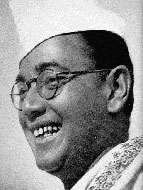
Jawaharlal Nehru

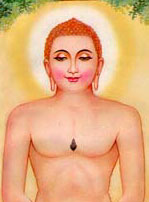
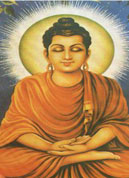
Dr. Babasaheb Ambedkar
Thursday, March 28, 2013
Gandhiji's Teachings
Mahatma Gandhi is arguably, one of the most influential persons of the 20th century. Albert Einstein, very aptly put it, when he said: "Generations will scarce believe that such a one as this ever in flesh and blood walked upon this earth." He was not just a political leader, but a social reformer and a spiritual teacher, too.
Incidents from the Mahatma's life and his well-documented experiments with truth serve as a great way of inculcating values in our children. He stressed that one should always live one's philosophies, beliefs and faith, and he was a prime example of that.
Incidents from the Mahatma's life and his well-documented experiments with truth serve as a great way of inculcating values in our children. He stressed that one should always live one's philosophies, beliefs and faith, and he was a prime example of that.
Honesty is the best policy
In primary school, once during a school inspection, Gandhiji had spelt the word, 'kettle' wrong. When his teacher urged him to copy from others and correct the spelling, he refused as he was convinced that it was not the right thing to do. Honesty and truthfulness were qualities he came to embody throughout his lifetime.
In the modern world, we strive to make our children excel in academics, sports and the ways of life, but we must also pay great attention to these character-building attributes, which may seem a little old-fashioned.
Clothes do not a man make
When Gandhiji set out to England to study law, he had a brush with the sophisticated lifestyle of the British. In his pursuit of being an 'English gentleman' he tried dressing up like one. He busted money on fashionable clothes and even a chimney-pot hat in a desperate attempt to belong. He took lessons in dancing and elocution, but these infatuations lasted for a while before common sense dawned. Gandhiji realized that character, and not clothes, made a man.
Much later, his thoughts about dressing took him further in quite the opposite direction and he started dressing in loincloth to empathise with the poorest of the poor. In that, he used the symbolism of dressing as a conscious tool to shape public opinion.
It would be far-fetched to expect that we emulate him, but it would be worthwhile to interpret his experiences and experiments in clothing, in spirit. Teenagers today spend unnecessary time and money on the latest fashion and fads to the detriment of other things. They should be discouraged from such wasteful expenditure and preoccupation.
Ahimsa and Satyagraha
Gandhiji built his life's mission on the two pillars of non-violence and truth. He said: "I have nothing new to teach the world. Truth and non-violence are as old as the hills." His interpretation of non-violence was not limited to abstaining from physical violence; he maintained that faith without action and suffering injustice were forms of violence.
In a society that is getting more strife-torn and ghettoized, we cannot underscore enough these age-old qualities and must seek to inculcate the same in our children.
Work for the larger good
Gandhiji propounded the teachings of the Bhagvad Gita, emphasizing, "work without the expectation of fruits of the labour done". Through the symbols ofcharkha, the spinning wheel and khadi, the hand-spun fabric, he stressed the message of physical labour. The spinning symbolized harnessing of every idle minute for common productive work. Gandhiji always maintained that one should look beyond one's personal aspirations and needs and work for the common good of society at large.
We must ensure that in the pursuit of name, fame and money, our children do not lose sight of the larger purpose in life. We must teach them to be socially responsible individuals who give back to the society what they gain.
Religious co-existence
Gandhiji was a votary of multi-religious identity. He said: "Even as a tree has a single trunk but many branches and leaves, there is one religion - human religion- but any number of faiths." He maintained: "The essence of all religions is one, only their approaches are different."
Though he drew inspiration from the Bhagvad Gita and was a true Hindu by action, he always remained open to influences from all religions and culture. He said: "I want the cultures of all lands to be blown about my house as freely as possible. But I refuse to be blown off my feet by any."
Again, in an age where hate politics and 'us and them' sentiments ride high, Gandhiji's teachings which he practiced diligently stand in good stead for the young generation.
As relevant as ever
Gandhiji's teachings are as relevant today as ever. Every growing child should be acquainted with his life and times, his struggles to shape himself and his politics that so changed the way the world looks at things. For, as he maintained, his life is indeed his message.
Mahatma Gandhi
Mahatma Gandhi
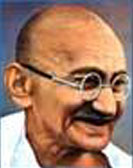
October 2, 1869 saw the birth of a famous Indian personality, lovingly called, the Father of the Nation. Mohandas Karamchand Gandhi was born to the Diwan of Porbandar, in the state of Kathewar in Gujarat. His mother, Putlibai, was a very religious lady and brought up her son with stories from the scriptures and mythology. Little Gandhi grew up to be an honest, upright student.
At the tender age of 13 he was married to a beautiful damsel named Kasturba. At 19, much to his mother's chagrin, he was sent to England to study law. He promised his mother that he would keep away from wine, women and non-vegetarianism - and he managed to stick to his word.
A Mission in South Africa
He returned to India as a barrister in 1891 and started his own practice at Bombay and Rajkot. In 1893 he went to S. Africa to fight a case. It was there that his life's mission was determined - to fight against injustice. Gandhiji could not tolerate the oppression of the Indians by the whites. So he stayed on in Africa for 12 years and established the Natal Indian Congress to improve the conditions of the Indians there, through peaceful, non-violent methods.
Struggle for Swadeshi
In 1914, Gandhiji returned to India and established the Satyagraha Ashram near Ahmedabad. Inspired by G.K.Gokhale and Lokmanya Tilak, Gandhiji toured the country listening to the woes of the common man. Gandhiji was touched by the plight of his countrymen and so entered the political arena.
He launched 3 significant movements with one goal - freedom from the British rule. The first one was the Non-Cooperation Movement, the objective of which was 'the attainment of swaraj by peaceful and legitimate means'. The method was to boycott foreign goods and official durbars, British courts and schools, give up honours and titles and go back to the use of swadeshi goods.
The second was the Civil Disobedience Movement. Launched on April 6, 1930, it began with the historic Dandi March or the 'Salt Satyagraha'. In order to oppose the British Salt Law, Gandhiji marched to Dandi along with his followers to make their own salt.
Quit India
The third one was the Quit India Movement of 1942, which resulted in the 'Quit India' resolution on August 8, 1942 urging the British to leave India. Finally India gained independence on 15th August 1947. Thanks to the efforts of Gandhiji.
On January 30, 1948, the Mahatma was shot dead by a misguided communalist. As Pandit Nehru put it, 'the light has gone out of our lives and there is darkness everywhere'.
Life and character sketch of Ravana
Ravana was a king of demons in the Hindu mythology. Here are some interesting tit bits about Ravana's life and his defeat byRama.
The pages of Hindu epic Ramayana introduce us to the notorious being called Ravana. The king of the demons with ten heads and twenty hands makes Hindu mythology really interesting. Ravanawas born to parents by name Visrawasa and Kaikasi. He had two brothers with names Kumbhakarna and Vibhishana.
It is believed that Ravana was the most dreadful creature ever born. His childhood was responsible to make him whatever he was. When he was a child, people were terrified of a child having ten heads and dark complexion. Let us once again go back in time of mythology and supernatural powers to get the glimpse of the life of deadly demon and incredibly scholar persona known asRavana.
How Ravana got his name...
Ravana's real name was Dasamukha which literally means one who carries ten heads. Valmiki's Ramayana narrates the story about how Dasamukha got the name Ravana. Once Ravana infuriated the great monkey king Vaali who was praying on the mountain. Agitated Vaali trapped Ravana. Ravana kept howling until Vaalireleased him from the trapping. Since then people forgotDasamukha and remembered Ravana.
Intellectual and scholar demon
Though Ravana is looked upon as a cruel demon who annoyed the innocent, he is also known as a great intellectual in the history ofHindu mythology. Under the guidance of his father, Ravana grasped vast knowledge. He learned sacred texts like Vedas. He mastered holy scripts. Ravana himself was a Brahmin but he learned the skills and techniques of Kshatriyas.
Devotee of lord Shiva
The demon that was well known for his evil powers had great faith in almighty. He was a believer of the supernatural beings. Ravanawas a faithful devotee of lord Shiva, one of the incarnations of lordVishnu. While possessed with obsession to manifest Lanka, Ravanaconfronted Shiva. Ravana tried to move on the mountain Kailash, the home of the lord Shiva.
In anger Lord Shiva punished Ravana by pressing him under his little toe. Ravana howled and danced to please lord Shiva. Then onRavana worshipped lord Shiva with unconditional devotion. During this chance meeting with Shiva, Ravana composed Shiva tandava stotram.
The gruesome side of Ravana
Ravana had many wives but Mandodari is renowned as she was famous for her elegance and beauty. She was intelligent. Apart from legal wives Ravana was believed to have physical relations with many other women whom he had captured in the battles. There is a mention of the episodes in the Ramayana that he forced several women; amongst them was a sage-woman Vedavati.
Vedavati who was infatuated with the charisma of lord Vishnu, ended her life after losing her chastity. Ravana also tried to abuseRambha, an apasara engaged to Kubera's (the god of wealth) son. After learning Ravana's advances, Kubera cursed him that if he tried to force himself upon any women, all his heads would fall off. This is one of the reasons why he did not touch Sita when she was in his abduction.
The king of demons
Ravana was obsessed with the thought of conquering Lanka. Ravana performed tapas for many years to please Brahma, the god of creation. Seeing his dedication Brahma bestowed him boons.Brahma granted his wishes to be unbeatable by gods and other powers. After getting the control of divine power, he conqueredLanka.
In his tenure, Lanka was a prosperous and wealthy kingdom. He leaded Lanka with his skills and he was considered one of the great monarchs. Under his ruling people in Lanka were living affluent lives. It is said that they actually owned gold vessels to consume their food. Ravana was admired for his huge knowledge of weapons and sorcery.
Ravana kidnaps Sita
Ravana's sister Shurpanakha was fascinated by Rama and she proposed him for marriage. Rama refused her proposal as he was already married to Sita. Then Shurpanakha pleaded Laxman, Rama's brother to marry her. In a fit of rage Laxman chopped off her nose. Ravana got angry and to take revenge he kidnappedSita.
Sita was in his captive for nearly a year. Later she had to go through Agnipariksha to prove her chastity. Some facts in the mythology say that during her abduction, Ravana persuaded her to be his wife but never touched her. Other facts say that he kidnapped Sita only to take revenge of Laxman's behavior towards his sister.
When Hanuman (Rama's great devotee) was on his way back fromLanka to inform Rama about Sita's whereabouts, the demons in theLanka set his tail on fire. But with his powers Hanuman increased the size of his tail and Lanka was burnt. Rama with the help ofHanuman set off to Lanka once he got to know about the Sita's kidnap.
Decline of Ravana
As Ravana was unbeatable, Rama had to acquire a special weapon to kill Ravana. Laxman got severely injured in the battle but he was saved by the magical herbs from the Himalayas. Finally Rama defeated Ravana and that was the end of the empire of Ravana. Ravana lost his life and his virtues because of his Karmas. His ego was solely responsible for his devastation.
On the day of Dassera Ravana's effigies are burnt to signify the power of the good over evil. But on contrary in some parts of IndiaRavana is worshipped on Vijay Dashmi. Ravana is the symbol of wickedness as well as wisdom. Ravana is burnt and worshipped for ages and will be burnt and worshipped for ages.
Thought Showers
THE boardroom was silent apart from the slurpy sound of Barnaby devouring his breakfast.
“Do you want that sausage?” asked John.
“Yeah.”
“Sure?”
“Yeah John I’m sure."
“Do you want that egg?”
Penny interceded forcibly. “Boys behave!”
“Sorry boss,” said John meekly.
Penny moved her plate away and shuffled a pile of papers.
“Let’s get down to business shall we, this is a WORKING breakfast. Barnaby, did you put that ‘do not disturb’ sign on the door and disconnect the outside line?”
“Sure did Penny,” said Barnaby, wiping the remnants of a fried tomato off his lips.
“All mobiles turned off?” said Penny.
Both men nodded.
“Good, because we’ve got quite a busy agenda this morning and I don’t want to be disturbed. Now with Simon sunning himself in Tenerife, the H.R. update will have to come from Barnaby who’s going to take off his marketing hat for just a moment, aren’t you Barnaby.”
Barnaby, a podgy fellow in his early 40s, nodded dutifully.
He read from the note in front of him: “As part of our multi-pronged cost reduction and resource balancing programme – ah, these are Simon’s words – aimed at getting the company airborne and achieving forward mobility, a full briefing of employees is to be carried out by department heads on Friday afternoon.
“The workforce will be told that the company has to meet the 21st century on its own terms. The briefing will explain that this is an opportunity to move forward. However they will be informed that it is inevitable that the number of people employed in lower skilled activities will decline as functions get disintermediated by technology.”
Penny turned to John: “What’s the nuts and bolts on this from a finance P.O.V.”
John, a dapper 30 year old in an immaculately ironed white shirt, and neatly cropped black hair, straightened the knot in his tie, cleared his throat and replied: “200 redundancies equals 17.5 per cent savings.”
Penny smiled: “Excellent!”
At this moment the door to the boardroom opened and in walked a man in his 50s, about 6ft 2in tall, with lively blue eyes and greying slicked back hair.
The three executives looked stunned at his presence. He stood before them at the end of the oak boardroom table.
Penny, resplendent in her dark blue business suit and elegantly styled blonde hair, said: “Yes? Can I help you?”
The man replied: “No, I don’t think so.”
“So what are you doing here then?”
John interjected: “It’s Tom Coleman isn’t it, he’s one of the dispatch clerks.”
Barnaby blustered: “Look Tom or whatever your name is, if you don’t leave right now, I’m….I’m going to call security.”
Tom remained stationary but said: “Hey, steady on there, you’re starting to look a little flushed and with you carrying all that weight, and those oh so cute cheeks getting pinker by the minute, that’s probably not advisable.”
“How dare you, you…” said Barnaby, looking distinctly aggrieved.
Penny, who was typical of many powerful women in that she was not traditionally attractive, but had a dangerous, almost sexy edge to her, attempted to take the initiative. “Tom, let me introduce myself, shall I.”
“No need,” said Tom.
“Oh I think there is. I’m the chief executive of this company and I’m in the process of holding a very important meeting with my finance director John and marketing director Barnaby. If you have any issues you wish to air then I’m sure we can arrange a suitable time when these can be discussed in a reasonable and mature manner. Is that okay?”
“No,” said Tom.
Barnaby rose quickly and strode towards the door but found it locked.
“I’ll ring security on my mobile.” He took his phone out of his pocket – “Damn, it’s not working.”
Penny and John tried their phones but were also unsuccessful.
“Okay, so you’ve got our attention. What do you want?” asked Penny.
“I want to talk about redundancies,” replied Tom.
“What redundancies,” said Barnaby, a response which produced a gentle finger wagging from Tom.
“Naughty!”
Penny asked Barnaby if Tom was on the redundancy list.
Barnaby perused the H.R. document and replied:”Yeah, he’s on the list.”
There was an intake of breath from John: “Oh dear.”
“SO where do we go from here?” asked Penny.
“I think we need a brainstorming session, no, no, that word’s out of fashion now isn’t it, no we need to have a thought shower session,” said Tom.
“Yes, I like that, yes, let’s all have a thought shower about the current situation. I hope I’m cascading that message through to all of you,” said Tom, sarcasm dripping through every syllable.
Penny, John and Barnaby sat uncomfortably in their padded executive chairs and Tom moved slowly around the plush carpeted room as he outlined his grievances.
“In these times of economic difficulties, all three of you have shown no inclination to reduce your own creature comforts. Let’s list the goodies you’ve been enjoying shall we: company cars, pensions, share options, those holiday homes in Tenerife for the select few, grandiose offices, not to mention bits of furniture which somehow end up being misdirected to your own homes, clothing allowances (that’s your speciality isn’t it Penny), sports club membership (Barnaby a squash club membership means you actually play the sport, not just drink at the bar and ogle the short skirts) and I haven’t even started on all the freebies, discounts, trade-offs. And the most disgraceful thing is that you haven’t even been that efficient in covering it all up. It’s so blatant, so shameful especially as you are now planning to put all these people on the scrapheap. You don’t even have a reasonable excuse do you, now that you’ve been caught out.”
Barnaby and John looked sheepishly at Penny but she stared defiantly back at her accuser.
“But…” said John.
“And then of course there’s the question of Penny’s bonus.”
“Sorry?” said Penny.
“Your bonus, the one you’re going to get for pushing through these redundancies. The one you’re going to get for keeping all the shareholders happy.”
“I don’t know what you’re talking about…”
“Yeah, what bonus?” said Barnaby.
“I didn’t know about a bonus,” added John.
“Tut, tut, boss lady, I’ve had access you know, I know about your bonus.”
Penny stood up angrily. “Access? Access to what? That’s private and confidential material.”
Tom pulled up a chair and sat down, still facing the three of them.
“Please sit down Penny. Let’s move on shall we. John, what do you know about me?”
“Hmm, your name’s Tom, hmm….. Tom….”
“Coleman.”
“Yes, that’s right, Tom Coleman. What else?”
“Hmm, well, you work in dispatch.”
Tom placed his elbows on his knees and moved closer to John.
“We’ve already established that but what you do know about me as an individual, a human being, a person.”
John looked puzzled.
“As I thought, not a lot. Would you like me to tell you a bit about myself.”
Before John could answer, an exasperated Barnaby said: “Just say yeah so we can get this over with.”
Tom got up from the chair and again walked around the room as the others watched him.
“I’m 56 years old, I joined the company when I was 24, so I haven’t climbed very far up the greasy pole but that’s never bothered me too much. I’m divorced, I have a daughter who is 19 and a 24 year old son. I like football, snooker, walking in the Yorkshire Dales, my star sign is Virgo, my hobbies include model railways, brewing elderberry wine and reading autobiographies, mainly political ones. I have a pet parrot called Toby, oh . . . . and I’m a witch.”
“Did he say witch?” said John.
“I do believe he did,” answered Penny.
There was stunned silence in the room. Tom came to a halt and then added: “And I’m afraid there’s no other way of putting this but you’ve really pissed us off.”
“Us?” stuttered John.
“So, what, you’re saying there’s more than one witch in the company,” asked Penny.
“Well, the good news is that out of a workforce of 750, you only have 90 witches. The bad news, and this really is bad news, you’ve made 89 of them redundant.”
“We missed one!” laughed Barnaby nervously.
“Yes, Kevin in I.T., must have been a computer error.”
“These witches, they know they’re being made redundant?” asked Penny.
“This is absolutely stark raving madness, I don’t believe in witches, I never have done and I’m not going to start now. This is just one big joke,” said Barnaby.
John straightened his tie again. “Barnaby’s right isn’t he Penny. We don’t have witches do we, he can’t be serious.”
Before Penny could answer, Tom said: “Oh yes, they know. So in answer to your rather astute question Penny, yes they’re upset but I’d probably use a much stronger word than that.”
“So they’re out for revenge?”
“By unanimous vote, the covens…”
“Covens? said John.
“Yes, there are seven covens in the company, by unanimous vote they decided that appropriate action be taken against all of you as soon as possible.”
Barnaby and John uttered protests but were quickly shouted down by Penny.
“Quiet! Let me think. What you mean by appropriate action?”
“Appropriate to your greed dear lady. We’ve looked at folklore and fiction and believe we have found the perfect response.”
Tom stood on a chair and, raising his hands above his head, shouted: “By the power invested in me by the special potion, by the power invested in my by the earth and the moon, I call upon the forces of nature to appear and do our biddings.”
Suddenly the room was engulfed with the noise of wind and rain beating against the windows even though it was sunny and the middle of summer outdoors.
This was followed by the distant sound of chanting which appeared to be getting nearer and louder every second.
“Take these three individuals and do with them as we have instructed,” said Tom.
“Galamanstus! Galamanstus! Galamanstus!”
The room was filled with flashing light and John complained that his ears were buzzing, Barnaby felt as if his nose was twitching and Penny said: “My eyesight’s getting fuzzy.”
All three had some vague awareness of the door opening and they felt as if they were enveloped in a foggy mist.
“Oh what’s that, that looks interesting. Why it’s….” said John.
“Come back John. John…what’s happening,” said Barnaby.
Penny gasped: “John are you okay? I can’t see you. John, where are you?”
There was a scuttling sound, followed by what sounded like a mousetrap snapping shut and a squeaking yelp.
“John are you there? Barnaby? Barnaby?” pleaded Penny.
A deep rumble emerged from Barnaby: “YUM-MY! IN MY TUM-MY!”
Another snapping sound and more squealing.
Penny was aware of a strange sensation running through her body. “John, Barnaby, where are you? Tom, please stop this, we’ll do anything you want, we’ll give you your jobs back, all of you, I promise. Oh I say, can anybody smell cheese?”
Krishna Returns to Mathura
Now stories about Krishna's deeds spread far and wide. When Kamsa heard about Krishna, he was sure that Krishna was Devaki's eight born child, born to destroy him. He, in turn, planned to invite Krishna to Mathura and have him killed. He summoned an old minister by the name of Akrura and sent him to Gokul with an invitation. Now Akrura was wise. He knew the real story of Krishna. That Krishna was a divine being born to kill Kamsa. He also knew that Nanda and Yashoda were not really Krishna's parents. On arriving in Gokul, Akrura told Krishna and his parents everything. Nanda and Yashoda were horrified, they wondered how a teenager like Krishna could take on a warrior like Kamsa. But Krishna insisted on going and he and Balrama left for Mathura.
In the mean time, back in Mathura, Kamsa was thinking of ways of having Krishna killed. He asked an elephant trainer to have a mad elephant trample Krishna. Failing that he was sure that his best wrestlers Mushtika & Chanura could challenge Krishna & Balrama to a match and kill them.
When Krishna arrived in Mathura, the elephant trainer was waiting for him at the gate. He sent the mad elephant Krishna's way. Krishna picked up the elephant by its trunk, hurled it into the air and killed it.
Krishna and Balrama then made way for the wrestling arena where Kamsa was. Kamsa then told Krishna and Balrama that his foremost wrestlers Mushtika and Chanura had heard of their strength and valor and would like to challenge them. Balrama killed Mushtika in mortal combat and then Krishna fought and killed Chanura.
Krishna then rushed towards Kamsa, grabbed his sword and killed him. Krishna then lifted the crown from Kamsa's severed head and walked towards the dungeon where King Ugrasena was imprisoned, freed him and offered him the crown. King Ugrasena was touched that Krishna would make him King again. Krishna then freed his parents Devaki and Vasudeva and had a joyous re-union with them.
The Angel
Whenever a good child dies, an angel of God comes down from heaven, takes the dead child in his arms, spreads out his great white wings, and flies with him over all the places which the child had loved during his life. Then he gathers a large handful of flowers, which he carries up to the Almighty, that they may bloom more brightly in heaven than they do on earth. And the Almighty presses the flowers to His heart, but He kisses the flower that pleases Him best, and it receives a voice, and is able to join the song of the chorus of bliss.”
These words were spoken by an angel of God, as he carried a dead child up to heaven, and the child listened as if in a dream. Then they passed over well-known spots, where the little one had often played, and through beautiful gardens full of lovely flowers.
“Which of these shall we take with us to heaven to be transplanted there?” asked the angel.
Close by grew a slender, beautiful, rose-bush, but some wicked hand had broken the stem, and the half-opened rosebuds hung faded and withered on the trailing branches.
“Poor rose-bush!” said the child, “let us take it with us to heaven, that it may bloom above in God’s garden.”
The angel took up the rose-bush; then he kissed the child, and the little one half opened his eyes. The angel gathered also some beautiful flowers, as well as a few humble buttercups and heart’s-ease.
“Now we have flowers enough,” said the child; but the angel only nodded, he did not fly upward to heaven.
It was night, and quite still in the great town. Here they remained, and the angel hovered over a small, narrow street, in which lay a large heap of straw, ashes, and sweepings from the houses of people who had moved. There lay fragments of plates, pieces of plaster, rags, old hats, and other rubbish not pleasant to see. Amidst all this confusion, the angel pointed to the pieces of a broken flower-pot, and to a lump of earth which had fallen out of it. The earth had been kept from falling to pieces by the roots of a withered field-flower, which had been thrown amongst the rubbish.
“We will take this with us,” said the angel, “I will tell you why as we fly along.”
And as they flew the angel related the history.
“Down in that narrow lane, in a low cellar, lived a poor sick boy; he had been afflicted from his childhood, and even in his best days he could just manage to walk up and down the room on crutches once or twice, but no more. During some days in summer, the sunbeams would lie on the floor of the cellar for about half an hour. In this spot the poor sick boy would sit warming himself in the sunshine, and watching the red blood through his delicate fingers as he held them before his face. Then he would say he had been out, yet he knew nothing of the green forest in its spring verdure, till a neighbour’s son brought him a green bough from a beech-tree. This he would place over his head, and fancy that he was in the beechwood while the sun shone, and the birds carolled gayly. One spring day the neighbour’s boy brought him some field-flowers, and among them was one to which the root still adhered. This he carefully planted in a flower-pot, and placed in a window-seat near his bed. And the flower had been planted by a fortunate hand, for it grew, put forth fresh shoots, and blossomed every year. It became a splendid flower-garden to the sick boy, and his little treasure upon earth. He watered it, and cherished it, and took care it should have the benefit of every sunbeam that found its way into the cellar, from the earliest morning ray to the evening sunset. The flower entwined itself even in his dreams—for him it bloomed, for him, spread its perfume, and it gladdened his eyes. And it was to the flower that he turned, even in death, when the Lord called him. He has been one year with God. During that time the flower has stood in the window, withered and forgotten, till at length cast out among the sweepings into the street, on the lodgers’ removal day. And this poor flower, withered and faded as it is, we have added to our nosegay, because it gave more real joy than the most beautiful flower in the garden of a queen.”
“But how do you know all this?” asked the child whom the angel was carrying to heaven.
“I know it,” said the angel, “because I myself was the poor sick boy who walked upon crutches, and I know my own flower well.”
Then the child opened his eyes and looked into the glorious happy face of the angel, and at the same moment they found themselves in that heavenly home where all is happiness and joy. And God pressed the dead child to His heart, and wings were given him so that he could fly with the angel, hand in hand. Then the Almighty pressed all the flowers to His heart; but He kissed the withered field-flower, and it received a voice. Then it joined in the song of the angels, who surrounded the throne, some near, and others in a distant circle, but all equally happy. They all joined in the chorus of praise, both great and small,—the good, happy child, and the poor field-flower, that once lay withered and cast away on a heap of rubbish in a narrow, dark street.
THE END
Subscribe to:
Comments (Atom)